
A seven-planet alignment is coming – tips for stargazing

If you thought January’s lineup of six planets was awesome, just you wait
February 28th sees a rare seven-planet alignment in the skies. Such an occurrence won’t happen again until 2040, making it a must-see for astronomy nuts and stargazers.
So what actually is a planetary alignment? Often also referred to as a ‘planetary parade’, this occurs when multiple planets appear to line up in the sky from Earth’s perspective. This alignment is an optical illusion resulting from the planets’ positions in their respective orbits around the Sun.
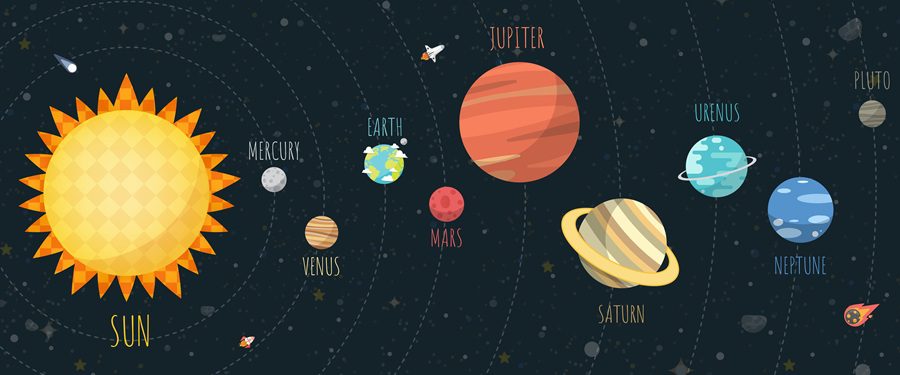
In this particular event, Mercury, Venus, Mars, Jupiter, Saturn, Uranus, and Neptune will align, creating a stunning visual spectacle.
Why is this alignment significant?
Alignments involving so many planets are exceptionally rare. This week’s alignment is unique because it features all seven planets visible simultaneously, a phenomenon that won’t happen again for another 15 years.
When and where to observe
The best time in the UK is on Friday 28th February 2025, shortly after sunset. The planets will stretch across the sky in a gentle arc from the western to the eastern horizon. Here’s a breakdown of where to look for each planet:
Mercury: Visible just above the western horizon. Due to its proximity to the Sun, it will set shortly after sunset, so it’s best to look for it as soon as the Sun dips below the horizon.
Venus: Located higher in the western sky, Venus shines brilliantly and is often the first “star” visible in the evening.
Mars: Look towards the eastern sky to spot Mars, identifiable by its distinct reddish hue.
Jupiter: Positioned high in the southern sky, Jupiter is the second-brightest planet in this lineup.
Saturn: Found low on the western horizon near Mercury. It sets relatively soon after sunset, so early observation is crucial.
Uranus and Neptune: These distant planets are located between Jupiter and Mars. They are not visible to the naked eye, so you’ll need to dig out a telescope, or strong binoculars to observe.
Tips for optimal viewing
Choose the right location. Find a location with minimal light pollution and an unobstructed view of the horizon. Rural areas or elevated spots away from city lights are ideal.
Arrive at your chosen spot before sunset to allow your eyes to adjust to the fading light. The window of opportunity to see all seven planets simultaneously is brief, especially for Mercury and Saturn, which set shortly after the Sun. There’s a high likelihood that loads of people will be heading for the same places, so plan ahead.
While Venus, Mars, Jupiter, and Saturn can be seen with the naked eye, bringing binoculars or a telescope will enhance your viewing experience, especially for spotting Uranus and Neptune.
Clear skies are pretty essential for observing celestial events. So check local weather forecasts in advance, and if conditions aren’t favourable, consider travelling to a location with a better outlook.
Read more: Photos from deep space by NASA
Planet facts
Mercury: The smallest planet in our solar system and the closest to the Sun. Despite its proximity to the Sun, it isn’t the hottest planet; that title belongs to Venus.
Venus: Known as Earth’s ‘sister planet’ due to its similar size and composition. However, its surface conditions are extreme, with temperatures hot enough to melt lead.
Mars: Often called the ‘Red Planet’ because of its reddish appearance, which is due to iron oxide (rust) on its surface.
Jupiter: The largest planet in our solar system, known for its Great Red Spot – a massive storm system larger than Earth.
Saturn: Famous for its stunning ring system, composed of ice particles, rocky debris, and dust.
Uranus: Unique among the planets for its tilted axis, which causes it to orbit the Sun on its side.
Neptune: The farthest known planet in our solar system, known for its deep blue colour caused by methane in its atmosphere.
If you’re heading out to the hills to stargaze, remember to dress warmly, and bring along some snacks and a hot (or warming!) drink. Happy gazing!

If you’d like to receive a regular mini-magazine direct to your inbox with a selection of editorial features to read at your leisure, please sign up for our newsletter. We also run the odd competition and offer and whatnot, and newsletter members get the heads-up first.
Read all about it

Leave a comment