
Dying with dignity: choosing your own exit strategy

Having a quality of life can include a quality of death
Dying with dignity on your own terms has historically usually meant a trip to Switzerland. But there is an alternative for those who want some control over their ending. Meet the ‘Living Will’.
To some, death can be a scary concept. However, for many people, the thought of being kept alive in a state where you are unable to move, communicate, and/or recognise yourself and loved ones can be equally or even more terrifying.
…if ending your days on this planet hooked up to a ventilator, feeding tube, or oxygen mask isn’t something you’d choose, there is something you can do about it
There are a number of conditions that can affect your brain and body, including dementia, degenerative diseases, or those that affect the central nervous system, such as motor neurone disease. People with terminal illnesses like cancer can also end up having their lives prolonged way past the point anybody would wish.
There are also traumas, such as a catastrophic brain injury, car accident and so on. You get the picture. Any or all of these could leave you in a state where life is never going to improve, but you’re kept alive because that’s the law.
But if ending your days on this planet hooked up to a ventilator, feeding tube, or oxygen mask isn’t something you’d choose, there is something you can do about it.
Read more: Swedish death cleaning – get your affairs in order before you die
Have you heard of a Living Will?
Many people are unaware of Living Wills. In fact, according to a 2020 report, only 13% of UK adults have a written Living Will.
It’s also a good idea to discuss your options with healthcare professionals
A Living Will, also known as an ‘advanced decision’, is a form that allows you to refuse medical treatment if you do not wish to have it in the future.
It is legally binding in England, Wales and Northern Ireland, and allows you to outline your treatment choices to your family, carers, and health professionals if you don’t have the mental capacity or are unable to communicate your wishes yourself. You plan this in advance, when you’re still fit and able. And it’s logged, ready to be activated when you can no longer advocate for yourself.
This means today you could protect the future you from having to endure the indignity of being helpless whilst you genuinely just wait to die.
It might sound brutal, but people may opt for a Living Will for many reasons, including:
– Not wanting their life artificially prolonged
– Want to make it easier for their family
– Wanting to be prepared and in control of their own choice
– Been diagnosed with a serious illness
How does this all work?
Whilst there are several ways to set something like this in motion (ask your solicitor), Compassion in Dying is the UK’s most recommended and trustworthy Living Will service provider.
Their main goal is to improve the dying experience in the UK by allowing people to take charge of how they want to end their lives.
To be clear; this is NOT the same as euthanasia. The refusal of treatment is not the same as asking someone to help you end your life.
Euthanasia and assisted suicide are the acts of deliberately ending a person’s life to relieve their suffering. They are illegal under British law. However, creating a Living Will allows you to make your own choices ahead of time, and is perfectly legal.
How to set it up
With a step-by-step guide, Compassion in Dying has helpfully made it easy. You must be over the age of eighteen and have the mental capacity to make a Living Will.
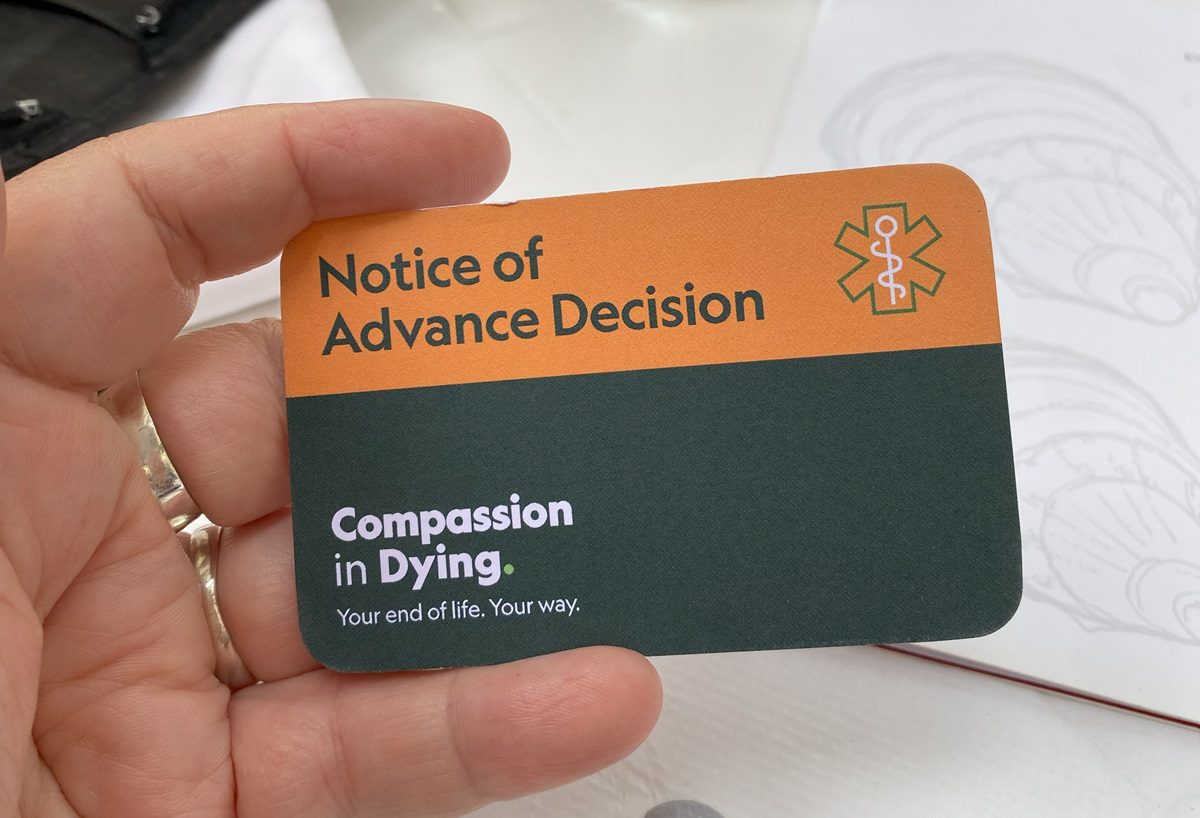 Their service includes a card, which you carry with you, a bit like the old organ donor cards
What should I think about?
Consider the circumstances where you’d want to be able to opt out of living if you could. Getting diagnosed with a terminal illness, for example, being catastrophically injured and left helpless or catatonic. But think also about the lives of those who care about you. It’s a journey that you and the loved ones surrounding you will face together, so it’s important to discuss this with them too.
It’s also a good idea to discuss your options with healthcare professionals. Explore the risks and benefits of different treatments that are available in the future, and consider what refusing treatments can mean.
In the end, your decision is yours and should be respected. If you have the mental capacity to think about how you want to be treated or not, then you should have the right to do so.
“What matters most is ensuring my family don’t have to make hard decisions about me and my health.”
Compassion in Dying

Elena is one of Silver’s interns. She has a love for illustrating, reading, and all things media-related. She is a self-proclaimed coffee connoisseur who spends her free time in coffee shops sketching and journalling.
Read all about it

Leave a comment