
Marble and mosaic: architectural travel from Florence to Venice
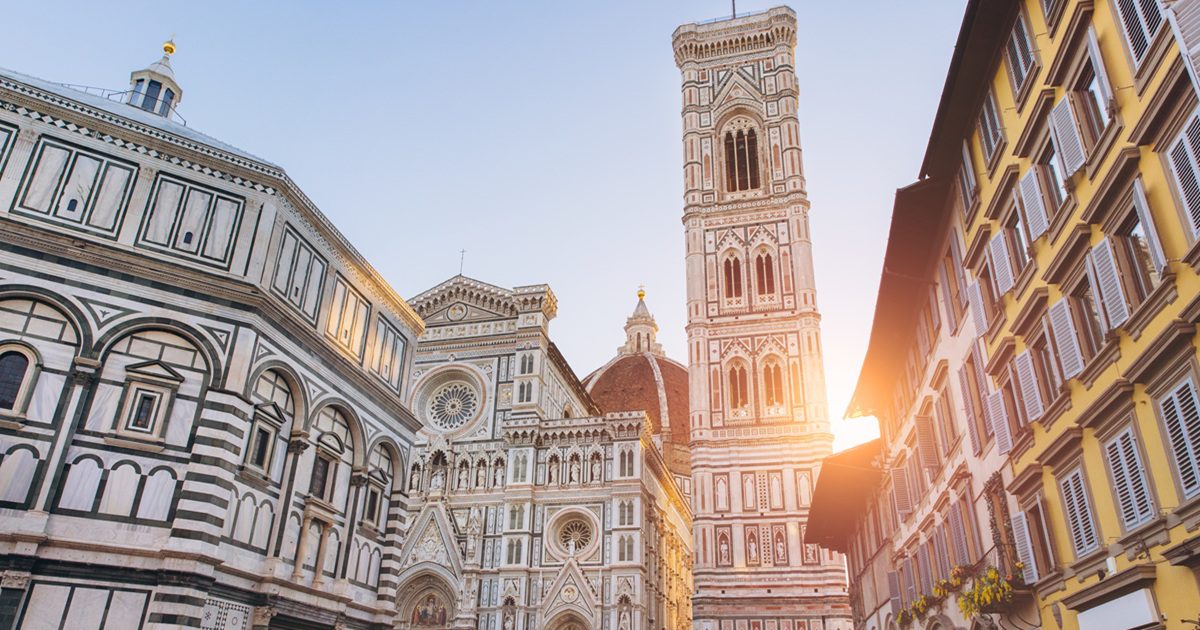
See the Giotto’s bell tower details, and the Doge’s palace grandeur
Florence and Venice don’t rely on scale to establish presence. They work through surface — stone chosen carefully, colour repeated with intent, decoration applied patiently over generations. You begin to notice this not in moments of spectacle, but in how long you linger without planning to. A wall holds light differently as the day shifts. A pattern repeats just often enough to feel structural. These cities don’t rush interpretation. They allow meaning to settle gradually, through proximity and habit rather than explanation.
Approaching Florence without resetting attention
Arrival into Florence rarely feels abrupt. The city gathers itself gently, streets narrowing as they move inward, pace adjusting without instruction. Travelling via Rome to Florence train tickets, the shift feels continuous rather than directional. Urban density loosens into open land, then reforms again without demanding attention. Speed exists, but it doesn’t disrupt rhythm. Whatever sensitivity Rome instils — to layering, to density, to time behaving unevenly — carries forward, allowing Florence’s quieter forms to register immediately.
Florence and the discipline of detail
Florence feels built around attention rather than display. Giotto’s Bell Tower doesn’t dominate its surroundings. It refines them. Marble panels sit at eye level, inviting closeness instead of awe. Sculptural details repeat with restraint, rewarding patience more than admiration. The tower doesn’t perform vertically. It works horizontally, through proportion and rhythm, reminding you that craft here was once a civic language rather than an artistic flourish. You don’t stand back. You move closer.
Venice’s architecture of assertion
Venice doesn’t refine its authority. It states it. The Doge’s Palace stands not apart from the city, but within its logic — facing the water that once carried trade, power, and reach outward. Stone and colour layer insistently, repeating until they feel inevitable. The building doesn’t invite intimacy. It establishes presence. The architecture makes its priorities legible through scale, placement, and repetition. The rhythm you’ve adjusted to stays present, even as direction changes. Despite its scale, the Doge’s Palace doesn’t feel distant. You encounter it while moving — crossing the square, adjusting to water light, listening to sound echo differently off open façades. Grandeur here is not theatrical. It’s administrative, confident, practiced. The building assumes continuity. It expects to be seen often, not once. Power, here, is not momentary. It’s sustained.
Returning to Florence after elsewhere
Coming back to Florence after time in places like Venice feels less like retracing steps and more like resetting attention. The Venice to Florence train is spoken about as a line rather than a moment — a familiar corridor that links inward focus with outward reach. The city receives you without ceremony. Streets feel narrower than you remember, quieter, more inward. Whatever outward pull Venice created — the openness of water, the insistence of light, the sense of scale — dissolves gradually as Florence gathers itself again around stone and proportion. You move differently on return. You notice detail sooner. The city doesn’t reintroduce itself. It assumes familiarity, allowing you to slip back into its rhythm as though you’d only been briefly distracted rather than truly away.
Craft as civic confidence
In Florence, material becomes instruction. Stone teaches consistency. Pattern teaches order. Ornament never overwhelms; it steadies. Over time, detail stops reading as decoration and starts reading as structure. You notice how easily daily life moves around these surfaces — people crossing squares without pause, conversations unfolding beneath centuries of careful work. The past doesn’t interrupt the present. It holds it in place.
When ornament becomes background
After time in both cities, ornament stops asking for attention. Pattern becomes expectation. Colour settles into familiarity. You stop noticing individual details and begin sensing coherence instead. This is when architecture feels most alive — not when it overwhelms, but when it supports movement without friction. People pass through spaces designed centuries ago without breaking stride. History doesn’t interrupt routine. It absorbs it.
Cities that refuse summary
Florence and Venice resist reduction. One isn’t simply measured and the other extravagant. They overlap in memory — marble recalling mosaic, repetition echoing repetition. The distinction softens as familiarity grows. You stop ranking experiences. You stop translating what you see into meaning. The cities remain in use, continuing to shape posture, pace, and attention without explanation.
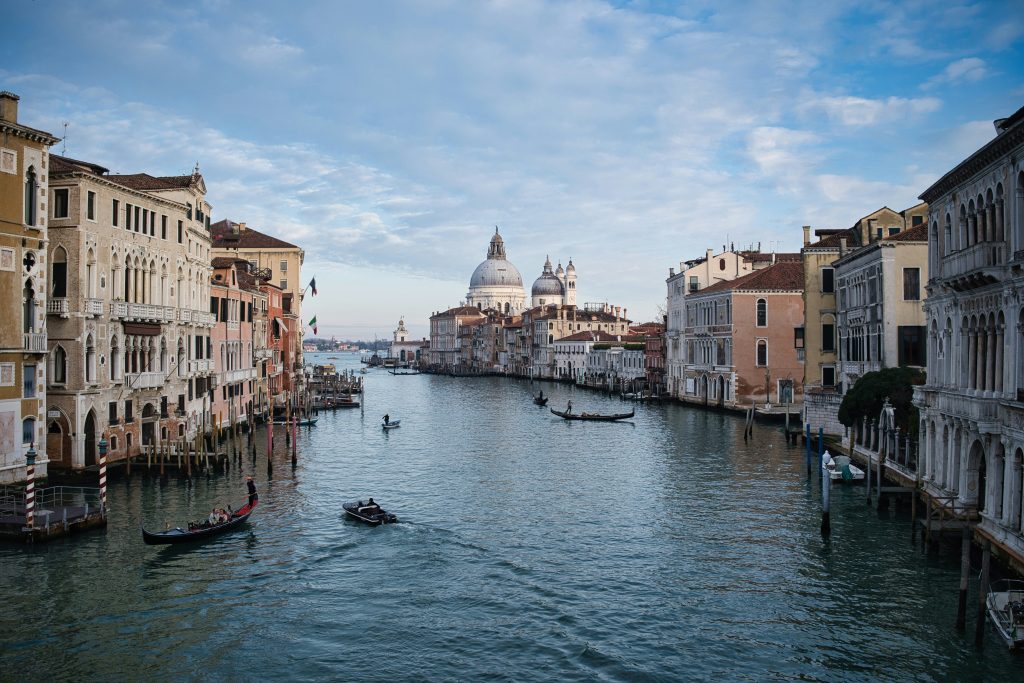
Photo by Maksim Shutov on Unsplash
What remains in the surface
Later, what returns isn’t a tower or a palace. It’s a way of looking — slower, closer, less concerned with scale. Marble and mosaic don’t resolve into ideas. They linger as texture and rhythm, reminders that some places were built to reward sustained attention rather than instant understanding. The experience doesn’t conclude. It thins out, unfinished, leaving you more attuned to surface, repetition, and the quiet authority of things made carefully and meant to last.
After the ornament fades
In the end, it isn’t Florence or Venice that asserts itself most clearly, but the space between them — the slow recalibration of attention that happens once you stop trying to separate restraint from grandeur. Giotto’s measured surfaces and the Doge’s patterned authority begin to feel like parts of the same language, spoken at different volumes. Marble and mosaic lose their status as objects to be admired and settle into something quieter: a way cities have learned to hold time. The journey dissolves first, then the landmarks. What remains is an ease with repetition, with surface, with the idea that meaning doesn’t arrive all at once, but waits until you’ve stopped asking it to.
A surface you carry with you
Long after the specifics blur, you find yourself noticing surfaces differently. Stone feels more intentional. Pattern feels earned rather than decorative. You slow down without quite knowing why, pausing a moment longer than necessary in places that don’t ask for it. Florence and Venice no longer exist as destinations in memory. They reappear instead as instincts — a preference for proportion, an acceptance of excess, a comfort with things made slowly and left to age. The article doesn’t end with them. It loosens, leaving behind a way of looking that travels quietly onward, unclaimed and unresolved.

If you’d like to receive a regular mini-magazine direct to your inbox with a selection of editorial features to read at your leisure, please sign up for our newsletter. We also run the odd competition and offer and whatnot, and newsletter members get the heads-up first.
Read all about it

Leave a comment