
Orange groves, elegant facades, and sunlit waterfronts in Iberia
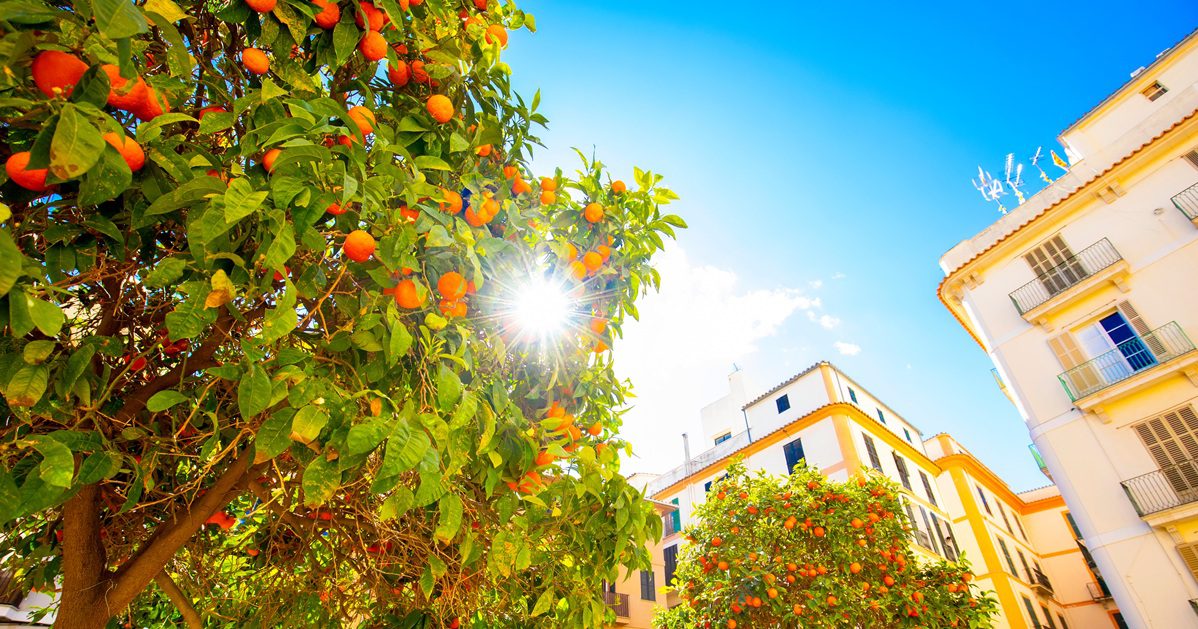
Iberia reveals itself through light before it does through landmarks
Sun settles differently here, lingering on walls, flattening colour at midday, softening everything again by evening. Cities respond by opening outward. Streets invite lingering. Waterfronts remain active long after their practical purpose has passed. What feels decorative at first often turns out to be structural, shaping how people move, pause, and gather.
Spain and Portugal share this relationship with space and light, though they express it differently. One leans into rhythm and openness, the other into texture and intimacy. Moving between them, you don’t experience contrast so much as recalibration — a subtle shift in how closely the city holds you.
Barcelona and the language of exposure
Barcelona rarely hides itself. Streets widen toward the coast. Buildings turn outward. Public space feels designed to be occupied rather than observed.
In Barcelona, colour responds directly to sun. Stone warms quickly. Shade becomes social rather than private. You notice how often people stop without purpose — leaning against railings, sitting along edges, facing outward rather than inward.
The city seems built to accommodate light rather than resist it.
Movement along the coast
Leaving Barcelona does not feel like departure so much as continuation. The Barcelona to Valencia by train traces the Mediterranean closely enough that water remains part of the background. Light stays constant. Pace remains unforced.
Inside the carriage, conversation stays low. Outside, the landscape loosens gradually — denser urban edges giving way to open stretches where citrus groves appear without announcement. Arrival feels expected.
Valencia and the softening of space
In Valencia, the city opens further. Squares feel broader. Streets allow longer pauses. The Mediterranean presence tempers everything — sound, movement, even attention.
Orange trees appear not as symbols, but as part of everyday scenery. Their presence feels practical, seasonal, and familiar. Scent drifts briefly, then disappears. The city breathes outward rather than holding itself tight.
Groves as working landscape
Beyond the city edges, orange groves stretch evenly, organised yet organic. They don’t invite spectacle. They exist because they are used.
You pass them repeatedly — by road, by rail, sometimes on foot. Over time, they stop registering as scenery and start functioning as reference. They mark distance. They signal season. Agriculture here shapes rhythm without dominating it.
Crossing west without abrupt change
The shift from Spain to Portugal does not announce itself loudly. Pace changes before architecture does. Colour deepens. Surfaces gain texture.
Movement feels absorbed rather than redirected. You adjust without marking the adjustment. Borders feel administrative, not experiential.
Porto and compressed beauty
In Porto, space tightens again. Streets narrow. Buildings lean toward one another. The river pulls movement downhill.
What stands out is texture. Tile-covered facades catch light unevenly. Blues, whites, and ochres shift tone as the sun moves. Walls feel worked rather than finished. The city reveals itself through surface rather than scale.
Following the river south
Travel along the coast maintains this intimacy. Taking the train from Porto to Lisbon keeps water close enough to shape mood without demanding attention. Light shifts subtly. Terrain smooths out.
Movement feels steady. Conversation stays quiet. Arrival does not interrupt the tone. The journey stretches rather than divides experience.
Lisbon and vertical light
In Lisbon, light behaves vertically. Streets rise and fall. Buildings stack unevenly. Shadows stretch long in the afternoon.
Tile facades reflect sun differently depending on angle and wear. Nothing appears uniform. The city feels held together by slope and repetition rather than plan. Walking becomes physical. Pausing becomes necessary.

Photo by Diego García on Unsplash
Waterfronts that remain in use
Lisbon’s waterfront does not feel ceremonial. People walk it daily. Sit briefly. Move on. The river acts as boundary and release at once.
Space here is not reserved for admiration. It remains part of routine — a place where the city exhales before pulling itself uphill again. The water stays present without dominating.
Tiles that carry memory
Azulejos appear everywhere — on houses, churches, stations. They are not precious. They are used.
Patterns repeat, crack, fade, and reappear. Over time, you stop noticing individual designs and start sensing continuity. The tiles feel like skin rather than ornament. They remain because they still function.
Different cities, shared sensibility
Across Iberia, cities respond to sun in similar ways. They open outward. They soften edges. They allow colour and texture to carry identity quietly.
Orange groves, tiled walls, and waterfronts are not decorative themes. They are working elements — shaping movement, pacing attention, and holding daily life in place.
What lingers after passing through
Later, what stays with you is not a checklist of places, but a sensation — light settling on walls, scent appearing briefly, water holding the city’s edge.
Iberia does not insist on spectacle. It offers continuity instead. Cities remain usable, textured, and open, shaped by sun as much as by history.
The experience lingers not as a route completed, but as a rhythm learned — steady, warm, and quietly persistent, long after you have moved on.

If you’d like to receive a regular mini-magazine direct to your inbox with a selection of editorial features to read at your leisure, please sign up for our newsletter. We also run the odd competition and offer and whatnot, and newsletter members get the heads-up first.
Read all about it

Leave a comment