
How nearly having a stroke changed my life
A warning shot across the bows has altered my outlook on life…
Imagine this: it’s mid-afternoon and you’re in a café. You’re trying to connect your laptop to the café’s broadband when suddenly the world tilts. Not the actual world – just your own inner world.
A text pings on to your phone – simple words, a short message… but you can’t comprehend it. You see the words and letters, they look familiar, but you can’t read them. Your laptop refuses to do what it’s supposed to. You look at the keys; they might as well be hieroglyphics.
As you pack up your stuff and try to say goodbye to the waitress who’d brought you your coffee just ten minutes earlier, no words come out. Panic rises, hands go clammy, your whole body breaks out in a sweat: it’s just the coffee, you tell yourself. It’s just deadline anxiety. But you know in your rapidly beating heart it’s neither…
So what was wrong with me?
Apart from the panic, I felt OK. But I knew something was very wrong. It’s nothing dramatic, it’s just odd. A quiet, insidious shutdown, my brain protesting… overload.
This was my reality one ordinary Thursday. The sudden onset of what initially appeared to be a transient ischemic attack (TIA) – a “mini-stroke”.
Fortunately, I got to A&E in time to avert disaster and swerve a full-on stroke. I was given emergency intravenous medications to lower my blood pressure. I was in hospital for three days but when I got home I started to wonder how many people actually suffer from TIAs, strokes or near-misses like me, and how many change as a result of that experience.
After posting about my experience on social media, I discovered that a lot of people had been through similar and many through much worse. Some don’t survive and some struggle to recover, but the vast majority bounce back.
Although it can be extremely tough at the time, most stroke-sufferers I’ve now spoken to say a TIA or stroke doesn’t have to signal the end. Far from it. It can be the fierce, unyielding catalyst for reinvention, a neurological nudge toward a life more aligned, more valued, more YOURS.
How a catastrophic event can reshape your future
In the UK, where around 100,000 strokes occur annually, the narrative often fixates on loss, the physical hurdles, the emotional toll. Yet emerging research paints a more hopeful portrait, one where survivors not only endure, but evolve psychologically in ways that enrich their lives.
A groundbreaking meta ethnography by UK researchers at the University of Salford synthesised patient experiences from multiple studies, revealing how stroke rehabilitation fosters a profound “evolution of identity.” Drawing from 13 international trials, it highlights how positive psycho-social shifts, bolstered by hope, robust social support and enhanced self-efficacy, can reshape survivors’ sense of self over time.
Staff encouragement and community networks play pivotal roles, turning vulnerability into strength. Participants described reclaiming autonomy, reconciling their pre- and post-stroke identities, and emerging with renewed purpose. Not despite the event, but because of it.
Read more: How dance therapy can improve stroke recovery
This isn’t isolated optimism
A 2023 systematic review in the International Journal of Nursing Studies, involving 60 global studies (many UK-led), identified 39 post-event treatments that demonstrably improved psychosocial well-being post-stroke. These included dialogue-based therapies and narrative approaches, which help survivors reframe their stories, reducing anxiety and isolation while focusing on resilience.
UK guidelines from the National Institute for Health and Care Excellence (NICE) echo this, recommending tailored psychological therapies that yield moderate-to-large reductions in depression and anxiety symptoms. The results are encouraging with up to 50% reliable recovery rates in some cohorts.
…dialogue-based therapies and narrative approaches, which help survivors reframe their stories, reduce anxiety and isolation
One feasibility study from Akershus University Hospital tested a guided self-determination intervention, where stroke survivors reported feeling “enriched” by sharing their experiences, gaining emotional tools to navigate distress and foster long-term coping.
Even in chronic phases, the Oxford Chronic Stroke Project (OX-CHRONIC), a UK longitudinal study, underscores that while challenges like fatigue persist, targeted support stabilises mood and boosts quality of life. With many survivors prioritising – and achieving – psychological recovery years later.
A joined-up approach to recovery
The Stroke Association’s approach to rehab includes a push for integrated care that addresses the “hidden” effects of stroke survival. These include mood swings, eroded confidence, feelings of despair – and encourages patients not to see them as permanent scars, but as potential points for growth.
Psychological interventions, from cognitive behavioural therapy to self-help relaxation, outperform the results from simply taking medications alone when managing symptoms, encouraging survivors to cultivate adaptive mindsets: acceptance, self-esteem and even positive affect that reignites social participation.
In essence, a stroke can rewire not just the brain’s circuits, but reset its compass – pointing toward more positive changes.
My own story – despite it not involving a full-on TIA or stroke – bears this out. A personal testament to how crisis can clarify. For me, after the initial panic and confusion, it felt as if a tangled overgrown pathway had been cleared. I can’t speak for victims of serious stroke, but I can speak as someone who teetered on the edge of that for a few days and whose experience is therefore somewhat piqued interest in the subject.
That Thursday, disoriented and silent, I stumbled home, my pulse thundering in my ears
I called my daughter and she suggested I check my blood pressure. It was perilously high. By the time I got to A&E, it was 240/180.
I was kept in the resuscitation bay and given emergency IV drugs. I had a CT scan, blood tests and eye exams mapping the unseen threats. And I was kept in ‘Resus’ overnight, monitors beeping, then wheeled to a ward as the meds wrestled my blood pressure down until it then hit a way-too-low 90/70. Another night of watchful waiting and, by the following evening, my BP stabilised. The days that followed are blurred by exhaustion; was it the sleepless nights at the hospital that wore me out? Or the side effects of the drugs?
Yet, piercing that haze, I sensed a shift. The hospital staff – charming, kind, unflaggingly professional – left me grateful, cheered up by their humanity and empathy. I felt elated and relieved, but this was no near-death epiphany. (I’ve danced with that spectre before and emerged unchanged.) No, this was more subtle, a brain-level recalibration, as if neurons had huddled in conference and taken a vote.
It was time to take action!
For many gruelling years, I’d poured my energy into others’ lives. Caring not just for family and friends but also (through my work as a journalist and filmmaker) extending lifelines to strangers. I penned articles, produced films, guested on podcasts, hosted a chat show. Often without payment, a compulsion born of a desire to help, without considering the toll this might take.
I knew working that way was unwise, but I naively believed that everything would work out fine in the end. Perhaps foolishly I believed in karma (not so much anymore) and was certain that kindness was always repaid. If I was generous with my time and energy, all would be well. What an idiot I was! Taking that route cost me dearly: my home sold under duress, confidence shattered, the will to go on flickering dangerously low on dark nights.
The near-miss TIA didn’t just threaten my life; it illuminated all the dark corners and shone a light on my own personal ledger book. Something in my brain – stressed to malfunction – whispered “You are worth more.”
I suddenly had an overwhelming sense of purpose and self-worth, a fierce determination to reclaim the reins. No more diffusion of my gifts into the void. I’m done with the gratis grind. No More Mrs Nice Guy! I know now that I must charge for my words, my vision, my value. Articles, films, shows, books – all now fenced with fair boundaries and proper pricing. It’s not bitterness, it’s not bigheadedness – it’s liberation. That brain blip powered up a woman who now knows her efforts demand equity, her light deserves reward.
In terms of avoiding this happening again…
I don’t like taking pharmaceutical meds, but the docs stressed that I was in an emergency situation. And after giving me IV ACE inhibitor Ramipril, they recommended I continue on it in pill form. I’ve been taking it now for six weeks and my BP is still high. Today’s reading is 194/117.
I’m having a device fitted to my arm for 24 hours in two weeks’ time which will take hourly readings, so they can get to the bottom of what’s causing the problem. In the meantime, I’ve cut out alcohol and wheat, and I’m also trying to cut out sugar.
I think perhaps the cause is not enough exercise – working on that – and maybe a lack of physical affection. After being in end-to-end relationships for over 40 years, I suddenly decided to go it alone five years ago. It’s benefited me in many ways, but has it affected my blood pressure? Who knows?
I’ve had every medical test under the sun now and one doctor commented that I might be one of those people who just naturally has high blood pressure. Others have said it could be hereditary and untreatable. (My parents both had high BP.)
For now, it’s a bit of a mystery but hopefully what happened five weeks ago won’t happen again. Just not sure how to make sure it doesn’t though.
A stroke – or a brush with one – may arrive unbidden…
But it needn’t steal your future. As those UK studies affirm, with support and intention, it can illuminate paths to psychological flourishing.
Stronger identities, resilient coping, lives laced with deeper meaning. My café blackout was no elegy; it was a stepping stone to this new bold chapter.
The world didn’t end that afternoon – and, oddly, the fact that it could have done wasn’t the point: it began anew. And, although no one is happy to endure such misfortune, like all my adversities, I feel privileged to have glimpsed into that world, lived to tell my tale and to feel stronger as a person because of it.
Have you experienced something similar? Let us know in the comments below.
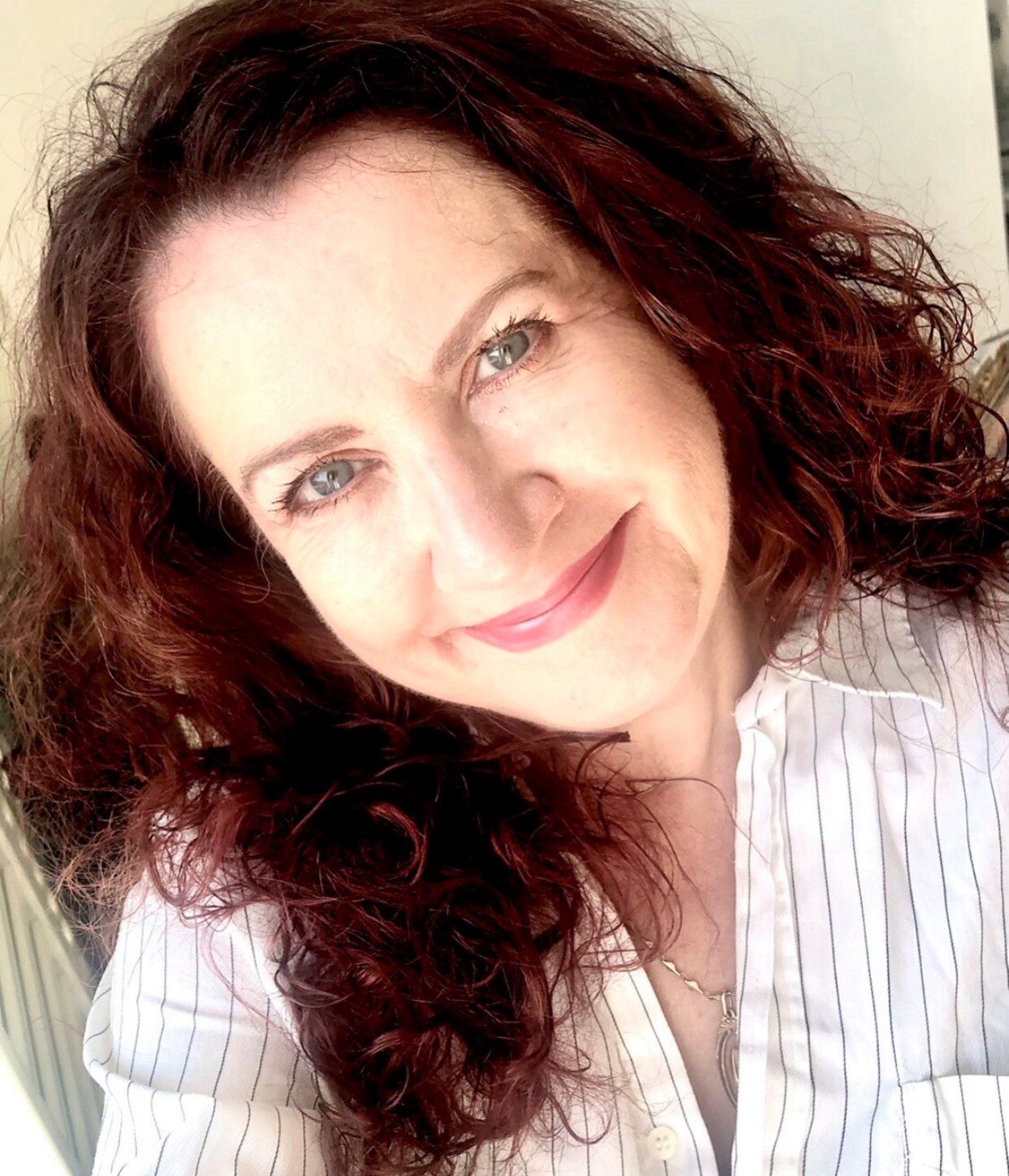
Jacqui Deevoy has been a freelance journalist for over three decades, starting out on teenage magazines, then later working for women’s magazines worldwide, and national newspapers including the Daily Mail, the Mirror, Express and Telegraph. These days, as well as writing for magazines, papers and websites, she produces documentaries and hosts a Monday night talk show for Unprecedented TV.
Read all about it
Leave a comment