
How to find and where to buy sustainable fish
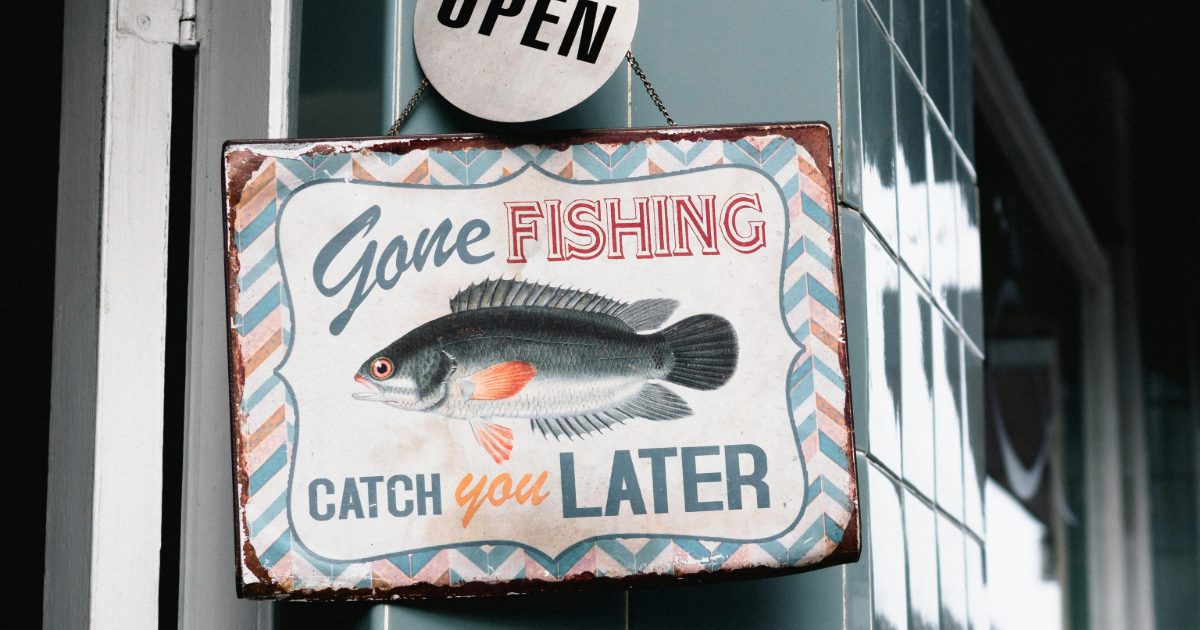
Avoid poorly-farmed fish and seafood, and eat without damaging fish stocks…
Two experts on how to find and where to buy sustainable fish and seafood, whether eating out or cooking at home. Having a little fishy on a little dishy isn’t necessarily as simple as seeing what’s on offer when the boat comes in.
Knowing how to find and eat sustainable fish isn’t always straightforward. You want to eat fish that isn’t appallingly farmed, or fished to extinction, but maybe you’re not sure how to verify that.
The Marine Stewardship Council (MSC) is an international non-profit organisation supporting sustainable fishing and fish stocks. Seeing an MSC label on your food is a very good place to start.
But the latest MSC consumer insights survey asked 4,000 people about their fish consumption, and found that people over 45 are eating more fish, but that awareness about the organisation’s eco-label is low.
Loren Hiller, commercial manager at the MSC, and specialist chef ‘Tom the Fish’, who has been running The Salutation Inn, a seafood hotel and restaurant in Devon for more than 10 years, have some useful tips for filling your dishy with fishies – with a clean conscience.
Love cooking fishy recipes? Try this zingy shrimp and turmeric soup
What are you putting in your trolley?
“The easiest way for a consumer to be assured that their seafood has been sustainably sourced is to look for the blue MSC eco-label,” says Loren. “This can be found on over 1,500 products across 53 species in UK supermarkets in the frozen and fresh sections. And even on pet food and supplements.
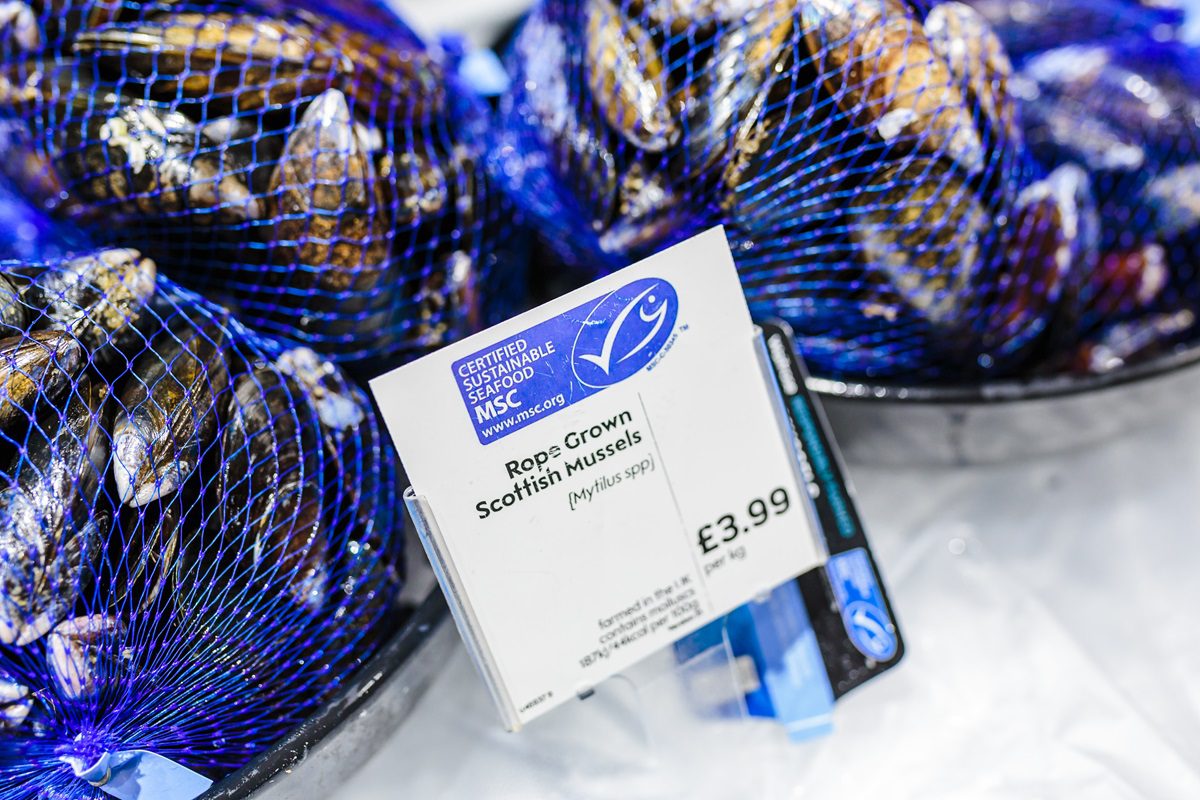
Look for the MSC label on all fishy products
“Essentially, that means you’re buying fish and seafood that has been sustainably sourced from a well-managed fishery. So that’s good for you and the ocean too, because these fisheries make sure the stocks are healthy.”
MSC-certified fisheries have a “minimal impact on the ecosystem and other endangered, threatened and protected species,” says Loren. Chef Tom is also a keen advocate of the MSC eco-label and urges responsibility on the part of supermarkets and shoppers.
“Most fish from supermarkets is farmed and imported. In 2022, the UK exported £1.7bn of fish and imported £3.7bn of fish. And we still import Russian cod to the UK via China, for instance,” he says. “But we live on an island so there’s a responsibility for supermarkets to sell local products. And there’s a responsibility to customers just to look at the labels and ask if it’s wild, how is it caught and where is it caught? Is it local or imported?”
Tom adds that it is important to consider how far a fish has travelled before it ends up in your trolley. “If fish has travelled across the continent, how have they been processed within the factory environment to make it still good to eat?
“There aren’t many fish counters left – Tesco has closed all of their fish counters now, so you can’t ask these questions directly from the fish-mongers – which is unhelpful,” Tom says. “And most people in this busy world don’t read the packaging – fish is convenient to buy in plastic, but, of course, it’s not great for the environment – so there are a lot of questions and choices for consumers to consider how ethical the fish is that they’re purchasing.”
So, which is better? Wild or farmed?
There’s no simple answer to this question, apart from “it depends”. While it’s common to assume that fish caught in the wild are automatically more sustainable than farmed fish, this might not always be the case. If the fish are wild-caught in an area that has been overfished, is unregulated, or uses unsustainable practices, such as drift net fishing, which can scoop up endangered marine life along with the more plentiful species, it won’t be a responsible consumer choice.
While it’s common to assume that fish caught in the wild are automatically more sustainable than farmed fish, this might not always be the case
The US-based National Oceanic and Atmospheric Administration (NOAA) makes it clear that wild and farmed fish can both be part of the solution. NOAA defines sustainable seafood as “wild-caught or farmed seafood that is harvested or produced in ways that protect the long-term health of species populations and ecosystems.”
The UN Food and Agricultural Organization’s guidelines for assessing what they call “marine capture fisheries” include transparency, consultation processes involving all stakeholders, robust objection procedures and standards based on “sustainability of target species, ecosystems and management practices.” MSC adheres to these guidelines when certifying wild fishing operations.
Fishmongers and fish markets
To reassure consumers buying from fishmongers and markets, Loren says to look out for the blue MSC label, which shows they meet chain of custody standards.

Not just for human fishy products either
“Every time you see the blue label, you can be confident that it’s come from a certified fishery [and] been handled by a supply chain where everyone has that chain of custody certification – they have been independently assessed – there’s no mixing of MSC and non-MSC fish.”
“And it’s just great to have that conversation at the fishmonger or fish market,” she continues. “Just find out a bit more because they really like having those conversations as well.”
Tom agrees that asking questions and learning from the expertise of fishmongers is important. He advises asking where the fish is from and how it was caught, as well as asking for cooking tips to “mix up the selection of fish you consume.”
“Waiter! Is this fish sustainable?”
Loren says the MSC eco-label can be found in many restaurants and fish and chip shops across the UK: “We work with a wide variety of food service outlets and it’s still growing.”
Perhaps surprisingly, McDonalds, JD Wetherspoons and Oaxaca are among the companies that work with MSC. So you can have that Filet-O-Fish with confidence. Or you can simply have a conversation with restaurant staff if the provenance of the fish is not made clear on the menu or you can’t see the eco-label anywhere.

Don’t be afraid to ask your server if the fish is MSC approved
“The origin of where the fish comes from should be displayed on the menu and if it isn’t, then just ask your server,” says Tom.
Loren says asking if they know where the fish has been sourced and what type of gear is used by the fisheries can be instructive. Generally, pole-and-line fishing has a lower impact on ecosystems, but if hundreds of boats are using this method, it can make fish stock vulnerable. Big trawlers, such as those used in the North Sea, are sustainable if the fish stock is healthy and plentiful.
Having that conversation in a restaurant may mean the manager gets involved. Or, if you’re eating in a restaurant that’s part of a group or chain, emailing head office to ask about their fish sourcing or checking the website can be useful.
Loren says that starting these important conversations with consumers is “the way to drive improvements [and] create a culture where people think, why wouldn’t you buy sustainable fish”.
Getting certified
MSC is an independent non-profit organisation that sets globally recognised standards for sustainable fishing and seafood traceability, with its certification programme for sustainable fishing practices. To obtain this certification, fisheries are independently assessed based on three main principles. These are the health of the stock, whether there are enough fish for the fishery to operate indefinitely, and the impact on the ecosystem.

“We look at what type of gear they are using. What impact does that gear have on the surrounding ecosystem? How do they interact with endangered, threatened and protected species – these are the ones they’re not directly trying to catch.”
Additionally, fishery management is scrutinised by MSC, such as complying with relevant laws and adapting to new information, according to scientific research. For example, well-managed fisheries will change the gear they use if new information shows that they need to use something better suited to the ecosystem where they operate.
MSC allows all gear types in its programme, apart from explosives.
The certification process can take 12 to 18 months, with certification lasting five years, albeit with regular checks each year.
Local fish for local people
Keeping your fish consumption as local as possible is one of the best ways to be an ethical, sustainable diner or cook.
“I believe that localism is the way forward with fish – it has been spoiled with factory fish farming, which can be far from ethically produced,” says Tom. “We have a fantastic wild bass season at this moment [Summer 2024] – it’s a few quid more, but it’s so worth it. And hasn’t travelled 2,500 miles.”
As a bonus, localism can help the UK’s fishing industry, which has taken a – pardon the pun – battering in recent years, with winners and losers emerging since Brexit.
“The UK has amazingly rich fishing grounds with conservation areas within the waters and I think it’s much better for the environment if we buy locally, buy seasonally, and don’t travel fish around,” Tom concludes. “If we kept the fish we exported and ate them too, it would be such a positive for the fishing industry, I believe.”

In a career that has spanned Australia, the Middle East and the UK, Georgia has written about all sorts of things, including sex, cars, food, oil and gas, insurance, fashion, travel, workplace safety, health, religious affairs, glass and glazing… When she’s not writing words for fun and profit, she can usually be found with a glass of something French and red in her hand.
Read all about it

Leave a comment