Martin Webb – the man who would be mayor
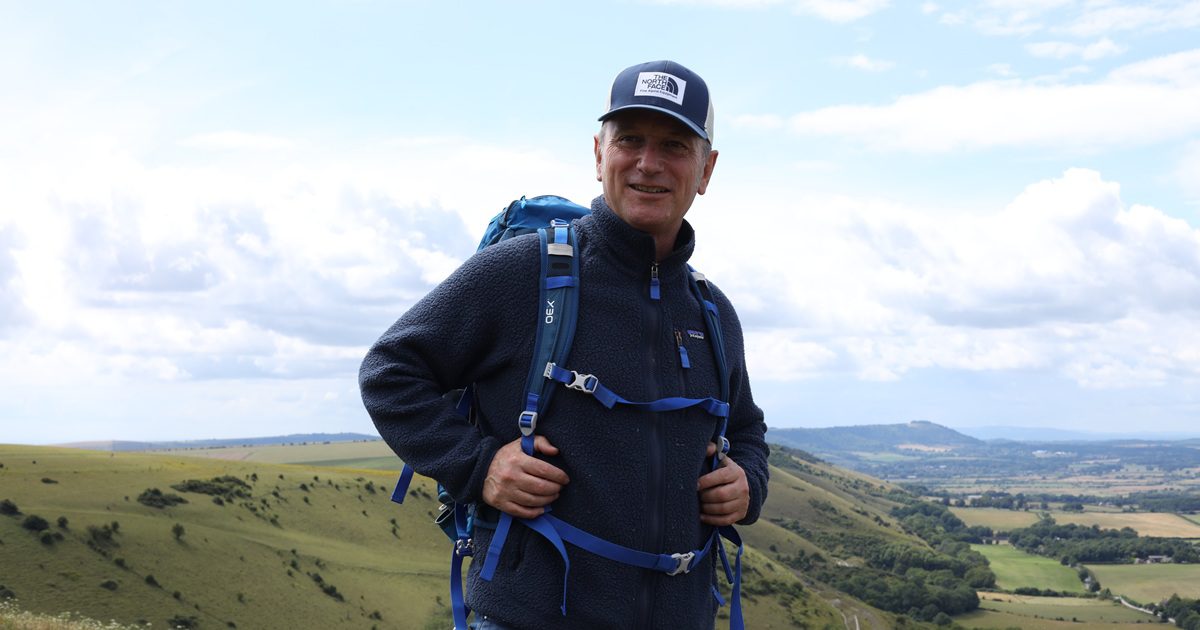
Entrepreneur Martin Webb on his plans for becoming Sussex’s first independent mayor…
 Martin Webb is not the sort of entrepreneur who fits neatly into a single box. Over the past three decades he has built and sold multimillion-pound businesses, volunteered thousands of hours as a police officer, mentored young people, and thrown himself into a range of charitable causes. Now he is turning his attention to politics, putting himself forward to be the first independent Mayor of Sussex in 2026.
Born and raised in Brighton, Webb left the city as a teenager to attend grammar school in Lancashire on a military scholarship before returning south to study business at the University of Brighton. By the ‘90s he had already co-founded what has been called “the largest hospitality company in the South.” Venue mix: pubs, bars, restaurants, nightclubs, even a fitness centre. At its peak it had turnover of over £24 million, and more than 300 employees.
Selling that business might have been the end of the story for many entrepreneurs, but Webb has always been restless. He went on to open what he describes as the UK’s first social-enterprise pub in Brighton (the Robin Hood), where part of the profits were channelled directly into good causes.
He also set up a rural economy venture in France, hosted a business-based TV show, wrote a weekly business column for The Telegraph, and published his own crime novel, The Most Dangerous Man in Brighton. The ventures may have varied in scale and style, but they all share a focus on enterprise, creativity and community.
Working with the police…
Running in parallel with his business career has been a long commitment to volunteering. Webb signed up as a Special Constable with Sussex Police and went on to serve for many years as a Special Sergeant. He has saved lives on duty, earned medals and commendations from the Chief Constable, and was recognised for his contribution during the Covid pandemic.
He has also raised money for Greenpeace, supported the Off the Fence homeless charity, and mentored young entrepreneurs through the Prince’s Trust.
 It is perhaps no surprise that this combination of commercial know-how and public service has led Webb to seek political office. He believes Sussex needs fresh leadership rooted in independence from party politics, and he is campaigning on issues that touch daily life: safer streets, better public transport, affordable housing, and more visible local policing. He talks often about his own family life in West Sussex with his partner, an NHS nurse, and their four children, linking his priorities back to the needs of ordinary households across the county.
In person, Webb is direct and energetic, the kind of man who clearly thrives on projects and ideas. His story so far is proof of a willingness to take risks. With the mayoral election on the horizon, he is stepping into a new arena – one where his mix of entrepreneurial drive and civic duty will face its biggest test yet.
I thought I’d put him through a few questions, find out what his plans are…
You’ve gone from the Brighton nightclub scene of the ’90s to standing for mayor of Sussex. How do you think your past has shaped the person you are today?
A lot has happened to me since the ’90s. I’ve set up loads of other businesses, been a TV presenter and writer, and spent nine years volunteering as a frontline police officer. I’ve also raised my family in Sussex. So yes, all those things combined have absolutely shaped who I am today – hopefully someone who’s grounded, sensible with lots of common sense and empathy.
Some people still remember you for that hedonistic nightlife era. Do you see that as a liability or an asset now you’re in politics?
One of the reasons I did well in the ’90s is that I wasn’t into the hedonistic party lifestyle myself. I was pretty sensible back then – busy building the business, employing lots of people and trying to deal with all the drama that being an entrepreneur throws your way. I’d like to think that building a big business in Brighton ought to be an asset in my campaign – it shows I’ve got a track record. And staying power.
You’ve built and sold several businesses. Which lessons from entrepreneurship are most relevant to running a county?
This is a really good question, as I’m always amazed that the ministers actually running the show have so little business experience.
One thing you learn in business is that if things are going badly, you need to do something positive to turn things around. That’s the opposite of what the government’s doing now.
As an example, the increase in NI contributions for employers is a tax on jobs. And as a result, businesses aren’t employing new people. It’s a crazy policy as it stops growth and will reduce tax income. It’s the opposite of what an entrepreneur would do, and shows a real lack of insight from those in charge.
On (TV show) Risking it All you mentored struggling entrepreneurs. What would you say to critics who think your success isn’t relatable to ordinary people?
I’d say my experience is totally relatable. I started with nothing – I didn’t have rich parents to help or any other form of outside help. I just worked my socks off doing something I loved doing. Can’t get more relatable than that, as I think that would be many people’s dreams.
You’ve written both business books and fiction. Do you think your creative side gives you a different perspective on leadership?
I’ve always tried to harness my creative side. My role as an entrepreneur has included being a designer, architect, advertising director, and so on. I love being creative and thinking of new, better ways to solve problems.
I think people are fed up with leaders banging away, using failed solutions, hoping things will turn out OK, when they clearly won’t. And I don’t want to do that. I aim to utilise originality and imagination to find solutions that work.
You spent years volunteering as a community police officer. What did that experience teach you about the realities of crime and policing in Sussex?
It taught me that there is too much crime and too few officers. It taught me that the police do their very best but get held back by lack of resources. Crime in real life is very unlike the angle you see in TV dramas. In reality, there’s so much crime linked to mental health issues and addiction.
You’ve spoken about being let down by the force during a crisis. What happened, and how has it influenced your views on how policing should be managed?
I had a collision with a drunk driver while I was on duty that resulted in me suffering from really bad PTSD. I was having panic attacks, insomnia for months afterwards, which led me to seek help for my mental health. It was awful; I literally thought I was going to die.
Sussex Police offered no support whatsoever. They acted as if they couldn’t care less, despite me volunteering two shifts a week and giving up most of my spare time to keep my community safe for years. It took them four months to even pick up the phone to see how I was.
I was shocked to learn the hard way that Sussex Police is a pretty poor employer. If I get elected, I’ll fight to change the culture at the top of Sussex Police. They need to do better for the brave and committed people who work there.
Do you think Sussex Police is currently fit for purpose? Where are they failing residents?
The latest Home Office report into Sussex Police rates them as ‘average’. I think the people of Sussex deserve better than average, and I’ll make sure we get the police service we need and demand.
The rank-and-file officers of Sussex Police are fantastic, but it’s higher up in the command team where things are less impressive. And change needs to happen quickly.
How would you balance the need for tougher policing with concerns about civil liberties?
I don’t think we have the balance wrong right now. I’m all for face recognition technology and other innovative ways to apprehend offenders.
Why Sussex? Why now? What made you decide to stand for mayor?
I’m a Sussex person, my family go back generations in the county, and it’s the place I love and call home. I’m also 60 years old, with a lifetime of relevant experience and skills.
Above all, I think I could really do the job well. I know I can make a real, positive difference to people’s lives by using two simple things: common sense and hard work. I’ve got the energy, vision and passion to make a real go of this.
What do you think is the single biggest issue facing Sussex today?
Crime is out of control in our towns and cities. This is the first thing I would address. People need to feel safer. We need to tackle the shoplifters. We need to crack down on anti-social behaviour. It’s simple.
How would your leadership style differ from career politicians?
I’ll be straight talking. I’ll listen. I won’t patronise people or speak in sound bites. I’ll be honest with people. I’ll be visible and not stuck behind a desk. I’m also not in it for the money like some.
You’ve created jobs through your businesses. What’s your plan for tackling unemployment and boosting local enterprise?
We need LOTS more investment that will lead to quality, well-paid jobs. I want to create an entrepreneurial culture in Sussex.
I’d like to see more investment and expansion in the areas we’re already excelling in; top-level manufacturing, media, and the tech sector
I also want to launch a mayor’s show to showcase Sussex products and services. We make, grow and produce some amazing wine, cheese, and other amazing items. We now need to shout from the rooftops about how great we are, across the UK, Europe, and even the USA – and get selling to the world.
Housing is a critical issue across the South East. What’s your approach to development versus protecting Sussex’s natural environment?
This is a massively complex problem, but in a nutshell, I’d favour brown-field over green-field development, and I’d want to ensure that large developments have conditions attached to provide infrastructure, such as doctors’ surgeries.
We need to build, but not at the cost of our amazing green spaces. Once fields disappear, they’re gone forever.
Do you see yourself as a populist candidate, or do you want to appeal to the centre ground?
I see myself as the local home-grown candidate who’s in touch with regular working people. I think I ‘get’ what concerns people most, and I think I can come up with practical, workable solutions to get our problems fixed.
Politically, I’m pretty much in the centre ground. But what’s more important is that I’ll always put Sussex first – I think that’s what people really want.
If you win, what’s the first tangible change Sussex residents will notice in your first year as mayor?
The first thing I’ll do is make our county safer and crack down on crime. In the first year, I’ll focus on shoplifting, antisocial behaviour, and rural fly-tipping.
People will notice more hi-viz foot patrols in our towns and cities. I’ll try to make people feel safer – if I can achieve that, it will be a good start.
As you can imagine, the first year will be incredibly busy for me if I am elected, and my other priority will be to do everything possible to boost business across the county.
(Martin Webb has neither paid for nor received any payment for this article)
Sam is Silver’s founder and editor-in-chief. She’s largely responsible for organising all the things, but still finds time to do the odd bit of writing. Not enough though. Send help.
Read all about it

Leave a comment