
Some of the best ways to cook carrots
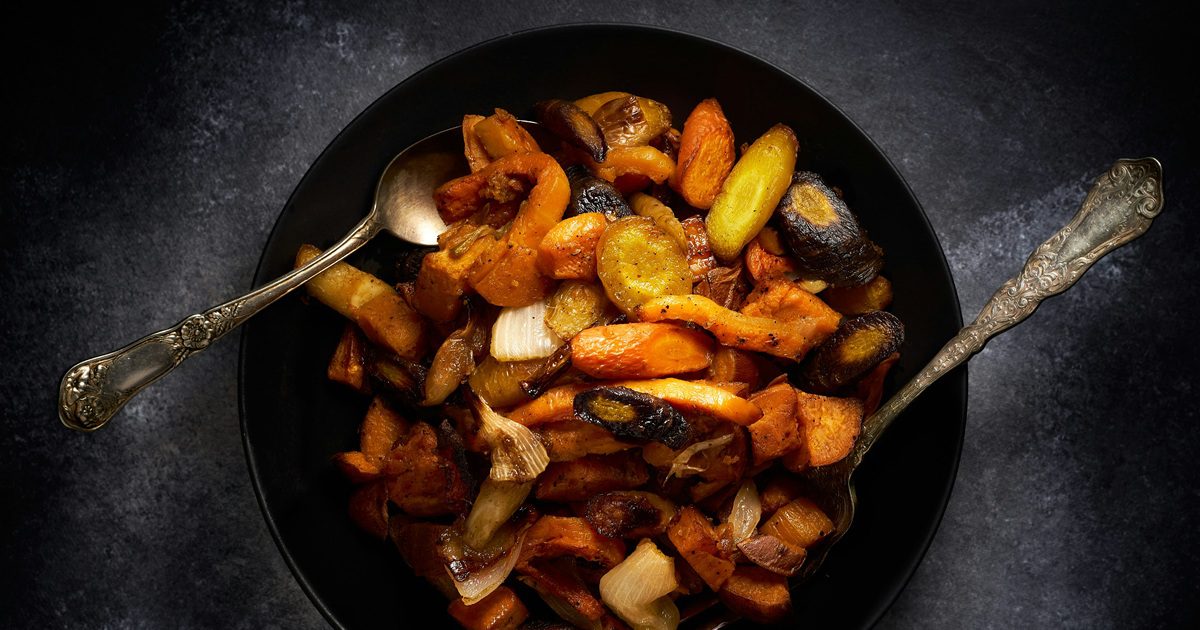
Carrots are often overlooked as a simple side dish
But this humble root vegetable deserves more credit. Packed with nutrients, endlessly versatile in the kitchen, and grown right here in the UK all year round, carrots are one of the country’s quiet food heroes. But rather than just boil them for your weekly roast, we’ve looked at some of the best ways to cook carrots. And delved into their health benefits.
A homegrown success story
Nearly all the carrots on British plates are grown locally, with UK farmers producing over 700,000 tonnes every year. That’s around 100 carrots for every single person in the country. They’re harvested throughout the seasons, starting in the south and moving northwards. Meaning fresh carrots are always available.
Each one costs just a few pence, but together they’re worth almost £300 million to the UK economy. From field to shop in just a couple of days, with minimal food miles, they’re a sustainable choice too.
Read more: how to eat more sustainably
The health boost inside every bite
Nutritionist Dr Laura Wyness points out that the standout nutrient in carrots is beta-carotene, which gives them their bright orange colour. Our bodies convert beta-carotene into Vitamin A – essential for vision, healthy skin, and a strong immune system.
Carrots are also full of fibre, something most of us lack in our diets. One medium carrot contains around 2g, edging you closer to the recommended 30g daily intake. On top of this, carrots are low in calories, naturally sweet, and 80% water, making them a refreshing and filling snack. Compared to a banana, a carrot has over 50% fewer calories and sugars, yet delivers far more Vitamin A.
Chewing raw carrots can even help with oral health by stimulating saliva. This reduces harmful bacteria, while the crunchy texture helps break down plaque.
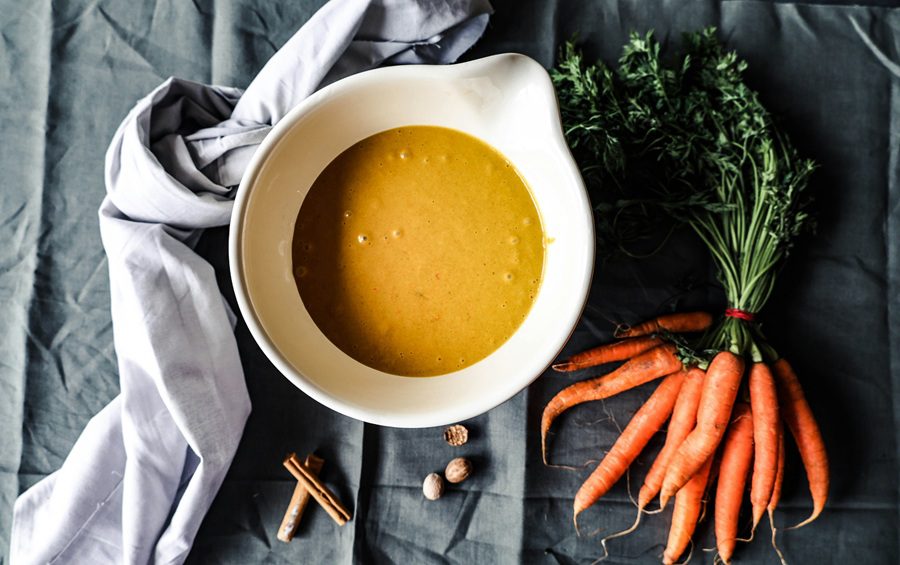
Spicy carrot soup
Ideas for new ways to cook and enjoy them
Carrots are cheap, colourful, and incredibly adaptable. They can be roasted, mashed, grilled, grated, spiralised, juiced, or baked. And they come in more than just orange – purple, yellow, pink, and stripy varieties can make your dishes stand out.
Try these easy ideas:
- Roast with honey and cumin for a sweet-spiced side.
- Toss carrot ribbons into salads or stir fries.
- Grill whole carrots, then serve with mascarpone and toasted nuts.
- Blitz the green tops into a bright, punchy pesto.
- Grate with apple and raisins for a fresh coleslaw.
- Bake into cakes, muffins, flapjacks, or even ice cream.
Carrots also work beautifully at every meal. Think overnight carrot cake oats for breakfast, a crisp carrot salad at lunch, and sticky roasted carrots with balsamic glaze for dinner.

Roasted whole with honey drizzle
Farmers behind the crunch
It takes more skill and technology to grow carrots than many realise. Fields are rotated to keep crops healthy, frost is warded off with straw, and GPS-guided tractors sow seeds in perfectly straight lines. Robots even help with weeding and sorting. Today’s carrots contain 50% more carotene than those grown in the 1970s, thanks to careful breeding and soil management.
Will Hunter, a fourth-generation farmer from Lancashire, says: “We are very proud of what we grow and want to show the skill and care that goes into producing something as ‘simple’ as a carrot. If every household ate just a few more, it would make a huge difference to British farming.”
A vegetable worth celebrating
Affordable, nutritious, and sustainable, carrots prove that sometimes the simplest foods are the most powerful. Whether you crunch them raw, roast them golden, or bake them into something sweet, they bring colour and goodness to your plate.
So next time you shop, add an extra bag. Britain’s farmers, and your body, will thank you.
Carrot factoids
- Britain produces over 700,000 tonnes of carrots each year – that’s the weight of 70 Eiffel Towers – around 100 each for every member of the population
- Carrots are harvested all year round so they are always fresh from the field starting earlier in the year with southern regions and moving up the country from Kent to the north of Scotland.
- The first recorded carrots weren’t orange – believed to have originated in Afghanistan in 7th Century AD – carrots were purple or yellow, with orange developed in the 16th century in Holland.
- To keep them cosy over winter and free from frost, carrots are covered with beds of straw
- Carrots like fresh soil and a new place to grow each year. To protect them from disease, carrots can only be grown in the same field once every seven years, so farmers ‘rotate’ them around their farm
- A love medicine: The Greeks called the carrot “Philtron” and used it as a love medicine
- Carrots like sandy soils, growing wonky if the land is stony.
- A lot of research, innovation and technology goes into growing the best carrots in the UK, from making sure the seed grows well in the soils we have, to improve nutrient value – today’s carrots have 50% more carotene that those of 1970 – and to make sure they last well on shop shelves. GPS is used in tractors to plant the carrots perfectly straight lines and robots are used for weeding and sorting
- Carrots are worth £290 million to the UK economy – but one of the cheapest veg to buy

If you’d like to receive a regular mini-magazine direct to your inbox with a selection of editorial features to read at your leisure, please sign up for our newsletter. We also run the odd competition and offer and whatnot, and newsletter members get the heads-up first.
Read all about it

Leave a comment