
Why driving at night gets harder as our eyes age
It’s not just your eyes – it’s a number of things…
As we get older, our eyes naturally change. Night vision often declines, glare from headlights becomes more of a problem, and focusing on different distances takes longer. These shifts can creep up gradually, but they have a big impact on how confident and safe you feel behind the wheel. Clear vision isn’t just a comfort, it’s the basis of every safe journey.
The fact is, if your vision isn’t up to scratch, all the speed limits, smart tech and airbags in the world won’t help to make you a safer driver.
It’s estimated that more than two million people in the UK are on the roads with vision that falls below the legal standard. A recent series of inquests revealed the very real human cost; a number of fatal collisions involving drivers with seriously impaired sight.
Remember the numberplate test?
Recently, a senior coroner called the current approach “ineffective”, particularly the number plate test that still exists in modern driving tests, and that so much still hangs on. The message delivered by the coroner was overwhelmingly clear: without reform, more avoidable deaths will follow.
In good daylight you must be able to read a modern number plate from 20 metres and meet a minimum visual acuity of 0.5 (6/12) with both eyes (or one in specific, typically medical cases). Whether you’re spotting a hazard, identifying a vehicle in traffic, or admiring personalised number plates, the ability to read them clearly is non-negotiable.
This might seem sensible on the surface, but critics argue that with advancements in modern technologies, relying on self-declaration and a kerbside reading test is an ineffective measure of one’s eyesight. In fairness, they may have a point.
What does declining vision actually feel like?
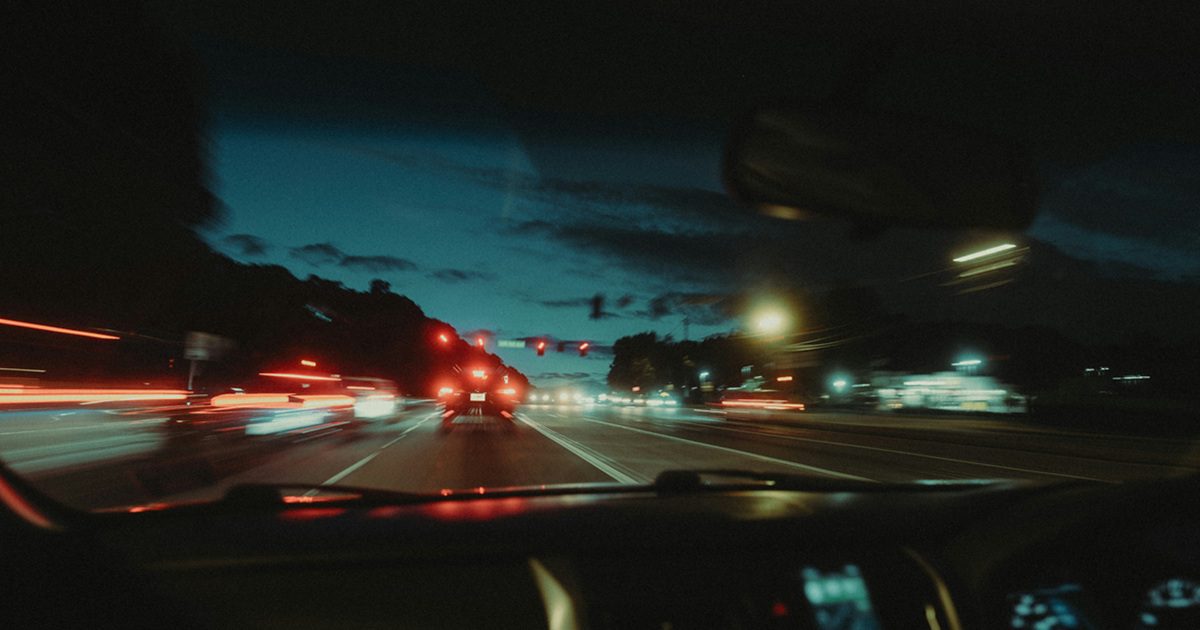
More often than not, worsening vision isn’t something you’ll immediately notice. Rather, it sneaks up on you. Astigmatism can smear headlights and streetlamps until they sprout starbursts and streaks. Signs become that bit harder to pick out in the wet, and lane lines seem to shimmer.
Cataracts add halos and glare that makes night driving feel like staring into a floodlight. Glaucoma trims away your peripheral vision, so a cyclist or pedestrian can slip into a blind spot at precisely the wrong moment.
And of course, a general decline in eyesight tends to make vision less defined. Think about the difference between standard definition and 4K – it’s not entirely dissimilar to that.
These aren’t rare edge cases; they’re everyday conditions with very real consequences once the sun goes down.
There’s also a growing frustration among motorists about dazzling headlights
Surveys over the past couple of years suggest the vast majority of drivers have struggled with glare. One RAC study reported more than four in five surveyed saying the problem is getting worse, while government-backed research into headlight impact is now under way. The AA has found similar worries among its members, with many pointing the finger at certain LED setups.
Whether it’s brightness, aim, or contrast with darker roads, the effect is the same: your eyes are working harder to see the roads, meaning that any underlying issue is also being increased in impact.
Read more: “Help – I’m trapped in a sexless marriage”
Mandatory eye tests are being considered for older drivers
Understandably, public debate is lively around the topic; plenty of drivers see this as a step in the right direction. But there are those who worry about fairness and where the line should be drawn. The Association of Optometrists, backed by the College of Optometrists, want to take this further. They’re arguing for full sight tests when you first get your licence, vision checks at each ten-year renewal for most drivers, and more frequent checks, every three years, for those over 70. But it may take some time for this debate to reach a conclusion and for policies to change.
So what can you do in the meantime?
Start by booking an eye test if it’s been a while. One every two years minimum is a good rule of thumb, sooner if something feels off. If night drives have become hazy or headlights leave you dazzled, don’t tough it out; that’s your cue to get checked.
Keep your windscreen and headlamps spotless, consider an anti-reflection coating if you wear specs, and be honest with yourself about long night journeys until your vision is sorted. As for those yellow-tinted “night driving” glasses that pop up online…be wary. They can reduce the overall light reaching your eye, not just the headlight glare. Not really something you want after dark.
Make your eye health checks as frequent as checking your tyre pressure or topping up the washer fluid. Book an eye test – and remind your friends and family to do the same. Forming this small habit now could pay off for years.
In the end, it comes down to something simple. Clearer vision means clearer judgement, faster reactions and fewer nasty surprises. We talk a lot about making our roads safer; this is one area where the fix is refreshingly straightforward. See better, drive better, and help everyone get home in one piece.

If you’d like to receive a regular mini-magazine direct to your inbox with a selection of editorial features to read at your leisure, please sign up for our newsletter. We also run the odd competition and offer and whatnot, and newsletter members get the heads-up first.
Read all about it

Leave a comment