
Susanna Hoffs: The Lost Record… and the good life
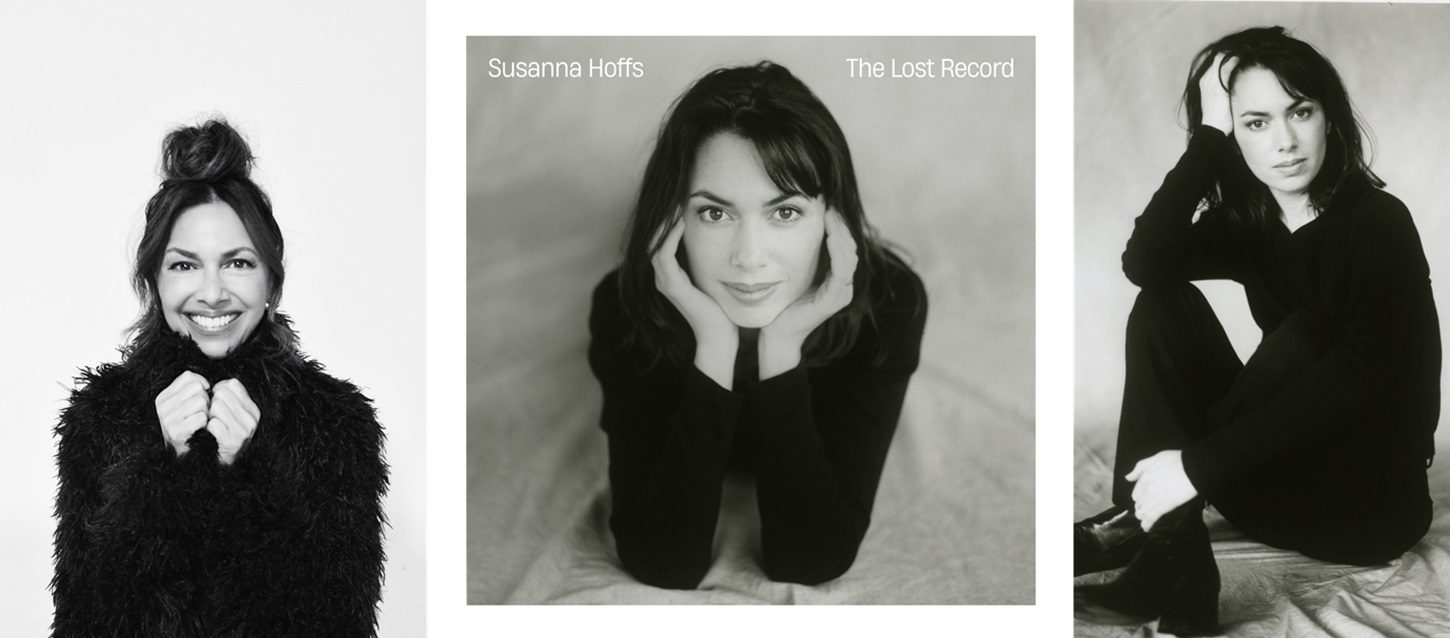 Photo credits: Shervin Lainez and Victoria Pearson
As Susanna Hoffs releases a new album of lost songs from the ‘90s, David Barnett catches up with her exclusively for Silver Magazine, on music, sex, and ageing…
Susanna Hoffs hasn’t really ever stopped producing music. But this new launch is different; this is a treasure trove of old songs from the ‘90s that didn’t get released. Hoffs recorded the tracks for The Lost Record in 1999. The songs were co-written with friends, including Bill Bottrell and Go-Go’s members Charlotte Caffey and Jane Wiedlin, with Dan Schwartz joining her to produce the album. And the tracks were recorded in her garage, a setting that holds special significance for her. “I love garage rock. Many of my favourite songs were written in garages, and I even lived in them during the ’80s.”
Susanna Hoffs is Zooming from — for reasons that sound like they should be more interesting, but actually aren’t — the spare bedroom of Bridget Jones author Helen Fielding’s house in California. She is dressed in pink and black; she’s always dressed in pink and black when we talk. She very much likes pink and black.
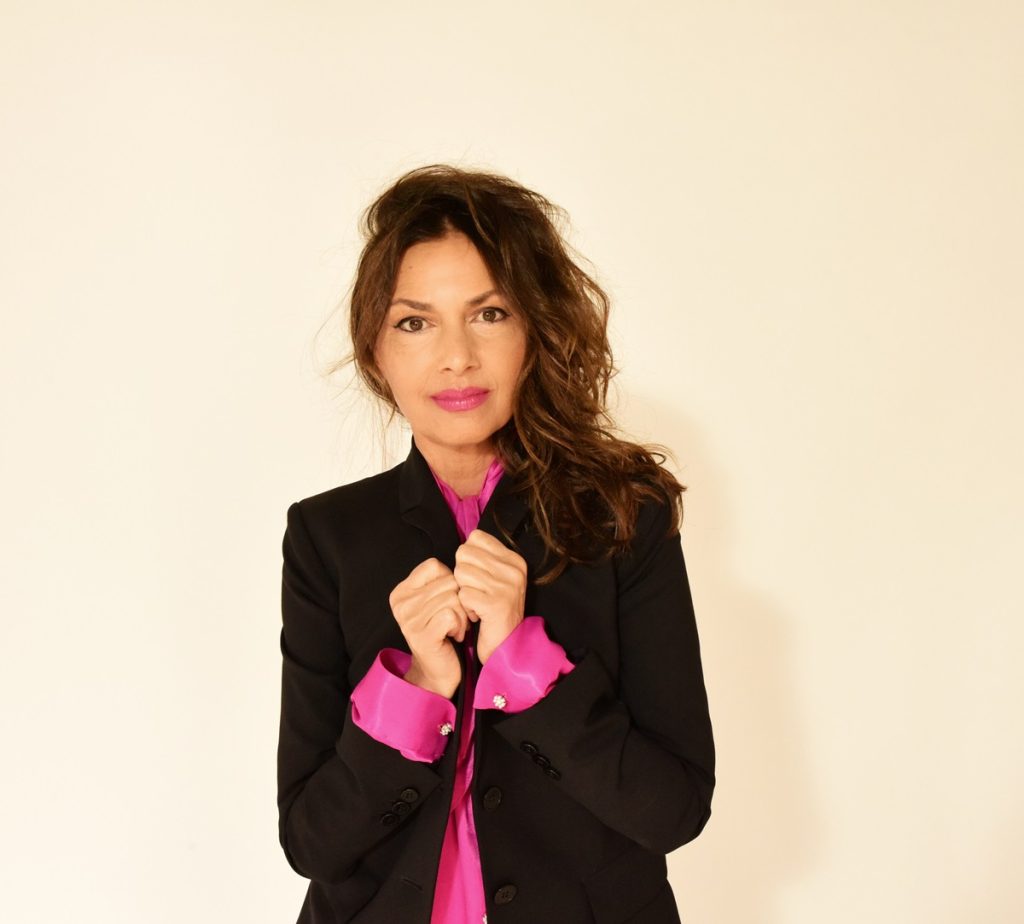
Susanna Hoffs, photo: Shervin Lainez
“Are you going to get my age right this time?” she teases. “You’re not going to make me any older than I actually am, again?”
Early last year I conducted a flurry of interviews with Hoffs, best known as one of the co-founders of The Bangles (where I got some dates wrong, hence the teasing). She’s often described as the lead singer of the band that, from the early ‘80s onwards, tore up the charts with singles such as Manic Monday, Walk Like an Egyptian, Eternal Flame, and their cover of Simon & Garfunkel’s Hazy Shade of Winter. Which (whisper it) I always thought was better than the original. But The Bangles — Hoffs, Vicki Peterson, Debbie Peterson, Michael Steele (the latter replaced founding bassist Annette Zilinskas, who later rejoined the band) — was always a four-vocals group.
Last year she realised a long-held ambition and saw her debut novel, This Bird Has Flown, published. And now comes the release of The Lost Record.
I tell Hoffs that it’s 40 years since the release of the Bangles’ debut album, All Over The Place, which would produce the singles Hero Takes a Fall and Going Down to Liverpool. “Are you sure?” says Hoffs. “You know what you’re like with dates.”
And yet, impossibly, it is. The band had previously released a five-track EP in 1982, but this was their first proper studio album. And it would bring them to the attention of not only the music industry, but artists such as Cyndi Lauper and Huey Lewis, who would get the band to open for them. And, most crucially, Prince.

The Bangles 1984. Photo: Aurelio Jose Barrera, Los Angeles
By the time the Bangles released Manic Monday in 1986 and Eternal Flame in 1989, their superstardom was assured — the latter single hit number one in nine countries. But the Bangles of five years earlier in 1984, when Hoffs was 25, was a less polished, more raucous affair.
“It was a very thrilling and exciting time to be in a band,” says Hoffs. “I mean, those pre-internet days. We advertised shows mostly by flyers, ads in free magazines like Recycler,” It was a real punk ethos, crystallised when she went to see what would turn out to be the last Sex Pistols live concert, at the Winterland Ballroom in San Francisco in 1978, when Hoffs was a student at the University of California, Berkeley.
She began studying theatre, then switched to dance, and finally settled on art, which was what she graduated with. “I jumped around a little, but by the end that all kind of coalesced into one big love of art in all its forms. And when I put that ad in for band members I think it was because at that point the idea of being in a band just seemed like the ultimate art project to me.”
Hoffs turned 65 in January. It seems a significant age.
I tell her that in the UK it was always a long-standing joke that when you hit that point you get your bus pass, though I have no idea if that’s still true. She laughs. “I know! Over here, we’d say I’m now eligible for Medicare!”
In the ‘80s especially, Hoffs was considered one of the most beautiful women on the planet. Before our interview she had posted on her social media a cover from Spin magazine, for which she was the cover girl for their “first annual swimsuit issue”. Given that the Bangles started off as a punky guitar band, how did she handle being called a sex symbol?
Hoffs laughs a little awkwardly. “I think part of that came from the rise of MTV in the 1980s,” she says. “Suddenly it wasn’t enough to just put out a record, there had to be a video with it. There were so many iconic videos at that time, and artists like Madonna were really pushing the sexuality. I used to handle that by creating a persona, really, for when I was performing.” She breaks out into a broad grin. “It’s like Nigel Tufnel in Spinal Tap. This dial goes up to 11. And that’s what it was like for me. I dialled it up to 11.”
Hoffs is a huge movie fan. Last year she did a feature for the Criterion film collection, highlighting her favourite movies. She included Beyond the Valley of the Dolls, La Piscine and Klute among her eclectic selections. One night she emails me out of the blue to ask if I’ve ever seen The Servant, the 1963 psychological thriller starring Dirk Bogarde.
 It’s no surprise Hoffs loves film. She was born in LA in 1959, and her mother Tamar was then a film-maker, her father Joshua a psychoanalyst. Celebrities regularly visited the house (especially for her father’s expertise in a field that was in its relative infancy). One family friend was Star Trek legend Leonard Nimoy, who appeared in the video for Going Down to Liverpool. She is married to Jay Roach, the film director with the Austin Powers movies on his CV, among many others, with who she has two sons. She is currently writing the screenplay for the movie adaptation of her novel This Bird Has Flown, which was published a year ago.
Hoffs has appeared in movies. Notably as the delightfully-named Gillian Shagwell in the Austin Powers movies, part of the band Ming Tea. And in the 1987 movie The Allnighter, directed by her mother. The cover of The Allnighter very much leans into Hoffs’ sex symbol status, featuring her in pink underwear.
I wonder if Hoffs still considers herself a sex symbol. She is very active on social media, especially Instagram. Her Facebook account has comments turned off on posts, but within minutes of her putting up a video on Insta, there are thousands of likes and hundreds of comments, many of them from men declaring they are in love with her, in lust with her, and worse.
Last summer, when she was over in the UK to promote her book, we met for lunch in London, and I mused that her direct message inbox must be an absolute bin-fire. She winced a little, and said that she has someone to filter out the worst of it before she sees it. So, I ask her. Does she still feel like a sex symbol today?
“I don’t think of myself as a sex symbol. I don’t think of myself that way. Or are we talking about sex? I mean, I’m 65 now, I’m not going to retire from it, that makes zero sense. A lot of my friends are my age and older and, you know, we talk about it and we’re not going to retire from that, ever.”
I don’t think of myself as a sex symbol. I don’t think of myself that way
I find myself blushing. That said, there’s a fair bit of sex in her novel, This Bird Has Flown. It’s the story of Jane Start, an ever-so slightly faded pop star who goes to London to recharge her batteries, and ends up in a swoonsome relationship with a slightly uptight but good-looking Oxford professor. Jane is pretty much a one-hit wonder, now resorting to doing private shows for bachelor parties in nightclubs, her big success a song gifted to her by international superstar Jonesy. There has been speculation that Jonesy is a Prince analog; the purple one gifted the Bangles the song Manic Monday, and acted as something of a mentor for Hoffs. There was endless speculation about whether they were in a relationship, which Hoffs keeps her own counsel on.
She does call him a “supernatural talent” though, saying his live performances were just incredible to watch. In the 1990s Prince would help her indirectly, as well… when she was about to go on stage, when she was ramping up that public Susanna Hoffs performance to 11, she would listen to Let’s Go Crazy on her Walkman to get into the zone.
“It enabled me to make that transition from me to the other me” she says. “Things got giddy and crazy. And sometimes it took a while to come down from that, to get back to me.”

Susanna Hoffs Self Portrait in Garage 1994
Hoffs still performs and writes music. Around the same time her novel came out last year, she released a new album, The Deep End, her fifth solo album, before The Lost Record this year. For her, ageing is not something to be necessarily worried about.
“I think ageing is about learning to love yourself,” she says thoughtfully. “Acceptance is very important. We have to accept changes in our lives and bodies, because anything other than accepting who you are is going to drive you crazy.”
Hoffs often posts videos and photos of herself on her social media without make-up, just dossing around her house. “I think that’s important, too,” she says. “At least to me. Being comfortable in who you are, and who you’ve become. I think the trick is to stay positive, if you can, to find the joy in life, to keep active, to seek inspiration everywhere. One thing is guaranteed, we all get older, and I think life is better if you follow the direction of that river than fighting against it. We just need to embrace ageing and get on with life.”
“…You’re going to get older. The only thing about that which makes sense to me is just embrace it. I mean, what’s the alternative?”
It being 40 years since the first Bangles album came out, would Hoffs swap being 65 for being 25 again, if that magic of the movies could work? She laughs, “Oh, no chance. I think the wisdom and experience that comes with living is far more valuable.”
If we were going to employ that movie magic so Hoffs could meet her 25-year-old self, what would she tell her?
She thinks about it. “My job at that time was really stressful. Don’t get me wrong, it was very enjoyable, and I feel so lucky that I got to do it. There was so much travelling, and it was very difficult to stay grounded and to carry on relationships.
“I think I’d tell 25-year-old Susanna not to be so hard on herself. To not judge herself so harshly. To worry less. I’d tell her not to question herself so much and to be less afraid, to be more fearless.
“I think being in your 20s can be very anxiety-inducing, and I suppose that goes the same for young women today. You’re trying to figure out your place in the world. One thing is certain, and it’s probably not what young women want to hear or think about but it’s unavoidable. You’re going to get older. The only thing about that which makes sense to me is just embrace it. I mean, what’s the alternative?”
We wrap things up. Susanna Hoffs has a screenplay to write, and a new book to think about, and a new record to promote. The bus pass will just have to wait, it seems.
Buy Susanna Hoffs The Lost Record here, released 18 October 2024
Buy This Bird has Flown, novel by Susanna Hoffs here

David Barnett is an author and journalist, originally from Wigan and now living in West Yorkshire. His latest novel is the folk horror WITHERED HILL, from Canelo, and forthcoming, a magical Christmas rom-com, THE LITTLE CHRISTMAS LIBRARY (Orion). He is married to Claire, a journalist, and they have two children, Charlie and Alice.
Read all about it
Leave a comment