
The health benefits of hiking, and how to do it right
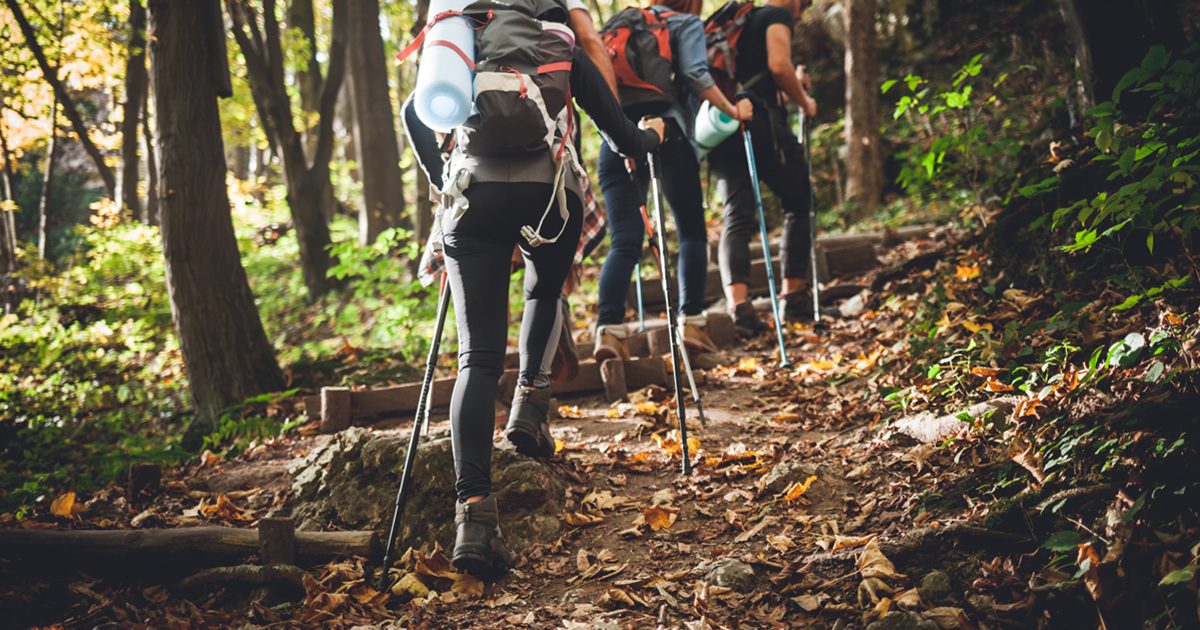
Looking for an easy, enjoyable and low cost way to get fitter and healthier?
Hiking is an activity that’s easy to get into. It’s so low-intensity, in fact, that you can easily spend an entire day on a single walk. And doing so can afford you access to outdoor sights and experiences that might not be accessible through other means. There’s nothing quite like achieving a challenging summit and taking the time to marvel at the view. Not to mention the health benefits of hiking – both physical and mental.
But if you’re going to go on a day hike, you’ll need to approach it in the right way.
Preparation
To begin with, you’ll want to pick out a hiking route that’s appropriate to your level of experience and skill, and to the time of year, too. If you don’t want to be hiking under the cover of darkness, that means paying attention to the time of sunrise and sunset, and planning your hike accordingly.
You’ll need to take a few essential items with you. This tends to mean a backpack stocked with non-perishable snacks, a canteen filled with water, a map, a compass, and a good pair of walking boots. Pick out boots that are appropriate to your sex and size. Hiking boots for women are different to those designed with men in mind.
Finally, you’ll want to dress for the weather you expect. Check the forecast, and take a few extra layers that you can shed as you go on.
Safety considerations
If you’re going to get the best from your hike, you’ll need to be able to understand all of the signs and markings you come upon. These might provide you with valuable information that will keep you safe. You might also carry a first aid kit that’s packed with essential items, and a charger for your mobile phone so that you can signal for help in the event of an emergency.
Time management
We’ve already touched upon the importance of managing your time such that your trip finishes before the sun sets. This might mean breaking down the entire trip into hourly checkpoints, so that you know when you’re making good time, and when it might be a good idea to pick up the pace (or turn around).
As part of your itinerary, you might incorporate rest breaks. If you’re going to be coming close to a point of interest, like a clifftop or a waterfall, then you might take the opportunity to stop for lunch.
Nutrition and hydration
Speaking of lunch: it’s essential that you keep your body supplied with water and essential nutrients. Dehydration is a problem that’s particularly worth considering on sunny days, but it can strike at any time of year. Make sure that you’re stocking up on nutrient-dense snacks, like fig bars, nuts, and bananas. The more miles you’re putting in, the more energy you’ll need.
Environmental awareness
Being a responsible hiker means passing through the environment without leaving any trace of your presence in it. That means not littering – even biodegradable things like fruit peels can be disastrous for the environment you’re passing through. You’ll also want to be respectful of animals, including wildlife and livestock.
Tips for enjoyment
Getting the most from your hike might mean taking a moment every now and again to simply pause and reflect on your surroundings. For some, this might mean taking a journal or a camera along; for others, simply stopping for breath every now and again might be all that’s required.

If you’d like to receive a regular mini-magazine direct to your inbox with a selection of editorial features to read at your leisure, please sign up for our newsletter. We also run the odd competition and offer and whatnot, and newsletter members get the heads-up first.
Read all about it

Leave a comment